HPE Discover 2026 welcomed about 30,000 attendees to the Venetian Conference Center this year. This year’s event felt fundamentally different from previous years, and not just because the kickoff was not in the Sphere.
There were significant announcements across AI infrastructure, networking, hybrid cloud, observability, security, storage, and operations. However, the bigger story was perhaps around HPE becoming a networking-first company and transforming into a platform company for the Agentic Enterprise.
Throughout the event, HPE executives delivered a remarkably consistent message. Antonio Neri outlined the strategic opportunity created by AI and the importance of building a strong foundation with an emphasis on networking. Rami Rahim demonstrated how networking is evolving into a strategic platform that supports AI-driven enterprises. Fidelma Russo expanded on that vision, describing how organizations must operationalize AI through governance, automation, observability, and intelligence-driven operations.
Taken together, their keynotes painted a picture of a company increasingly organized around two strategic pillars:
- The Self-Driving Network as the operational foundation.
- GreenLake Intelligence as the intelligence layer that connects infrastructure, data, security, operations, and AI agents into a unified platform.
The result is a vision for what HPE referred to as the Agentic Enterprise.
A Strategic Shift Toward Networking
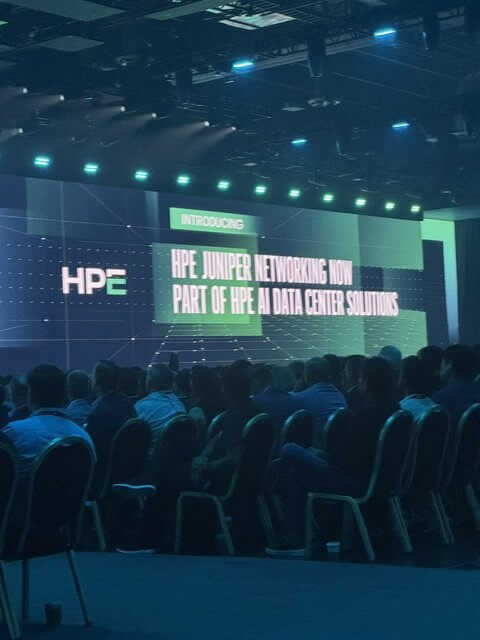
One of the most notable themes throughout Discover was the elevated role of networking within HPE’s broader strategy. During multiple sessions, Antonio Neri emphasized that organizations cannot successfully deploy AI without first establishing a strong foundation. He repeatedly highlighted networking as a critical component of that foundation and pointed to the successful integration of Juniper as a major strategic milestone for the company.
That message was reinforced throughout the week. For years, HPE Discover largely focused on servers, storage, hybrid cloud, and GreenLake. Networking was important but often played a supporting role. This year, networking emerged as one of the event’s primary strategic narratives.
With the addition of Juniper, HPE now spans campus, branch, WAN, data center, AI fabrics, routing, security, and operations. More importantly, the company is presenting these capabilities through a unified strategy designed to support increasingly AI-driven environments. The result is a company that increasingly views networking not as background infrastructure but as a strategic technology that enables AI, security, automation, and business transformation.
The Self-Driving Network Becomes the North Star
If Antonio established networking as foundational, Rami Rahim focused on what the future of networking should become. His keynote centered on HPE’s vision for the Self-Driving Network, which he described as the next evolution of enterprise networking. As AI drives unprecedented increases in complexity, scale, and operational demands, Rahim argued that traditional networking models are no longer sufficient. Networks must become capable of learning, adapting, optimizing, securing, and healing themselves in real time.
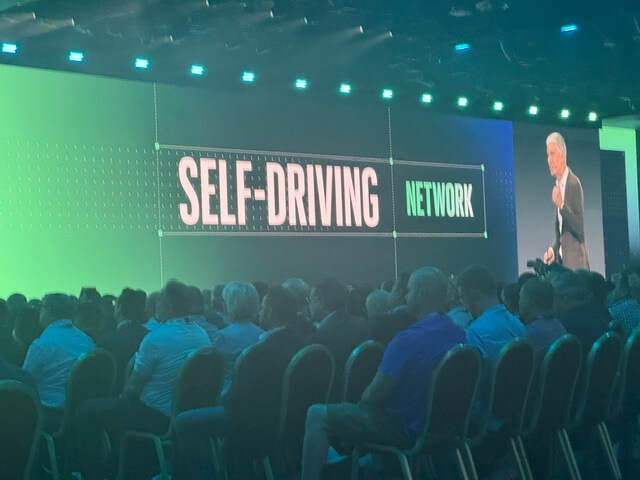
The Self-Driving Network strategy is built around several core principles:
- Self-optimization
- Self-healing
- Self-protection
- Automated troubleshooting
- AI-driven operational intelligence
Importantly, HPE is pursuing both “AI for Networks” and “Networks for AI.” The company continues to invest heavily in AI-native operations through Aruba Central and Mist, while simultaneously expanding its data center and AI networking capabilities, including 800G deployments and first-to-market 1.6 Tb liquid-cooled network switches, AI fabrics, and next-generation Ethernet architectures.
One of the most significant announcements for customers was HPE’s commitment to continue investing aggressively in both Aruba Central and Mist. Rather than forcing customers toward a single platform, HPE is leveraging a common microservices architecture and shared agentic AI framework to accelerate innovation across both environments. This approach not only protects customer investments but also accelerates the delivery of AI-driven operational capabilities.
Equally important, the Marvis AI engine is evolving beyond its original role. The technologies developed within Marvis are increasingly influencing broader operational workflows, helping establish a blueprint for how AI-driven operations can extend beyond networking into other technology domains.
Security Becomes Part of the Operational Fabric
Another theme at the event was the convergence of networking and security. Across keynotes and breakout sessions, HPE emphasized the importance of embedding security directly into infrastructure rather than treating it as a separate layer. The company’s strategy is to integrate its Zero Trust architectures, SASE, SD-WAN, network access control, policy enforcement, and AI-driven threat detection into a common operational framework.
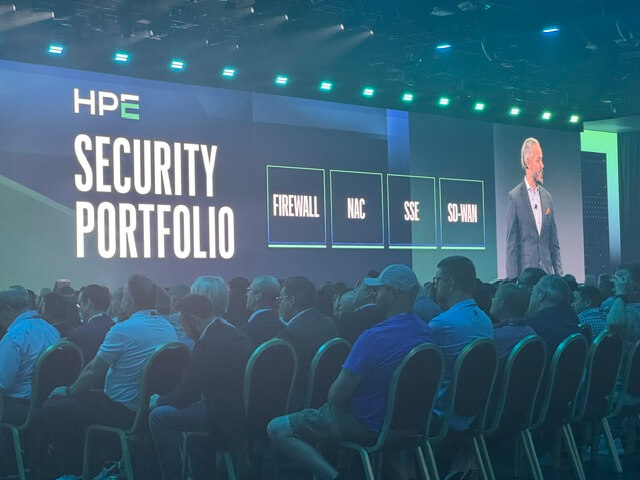
As organizations deploy more autonomous systems and AI-driven workflows, HPE believes security must become part of the operational fabric itself.
GreenLake Intelligence Emerges as the Strategic Control Plane
While networking was arguably the most visible story at Discover, GreenLake Intelligence may ultimately prove to be the most strategically important. If Antonio Neri’s keynote established the importance of the foundation and Rami Rahim’s keynote demonstrated how the Self-Driving Network can simplify and automate operations, Fidelma Russo’s keynote explained how all of these capabilities come together.
Throughout her session, Russo focused on a central challenge facing enterprises: intelligence is becoming distributed. AI is no longer confined to a single application or chatbot. It is increasingly embedded across workflows, infrastructure, operations, applications, and business processes. As intelligence becomes distributed, organizations require a common platform capable of coordinating, governing, and operationalizing it.
For HPE, that platform is GreenLake Intelligence. Rather than managing networking, compute, storage, security, and cloud infrastructure as independent silos, GreenLake Intelligence provides a common intelligence layer that correlates telemetry, operational data, dependencies, and business context across the entire environment.
GreenLake Intelligence is already extending into Aruba Central to support proactive network optimization and troubleshooting. It is integrated into Morpheus orchestration workflows, OpsRamp observability, infrastructure operations, and AI lifecycle management. Together, these capabilities create a common operational model that spans domains rather than treating each technology stack independently.
As enterprises deploy increasing numbers of AI agents across business processes and IT operations, those agents require context, governance, orchestration, observability, and trust. GreenLake Intelligence is increasingly positioned as the platform that provides those capabilities across the enterprise.
Morpheus, OpsRamp, and Zerto Expand the Operational Platform
Many of the software announcements highlighted during Russo’s keynote support this broader operational vision.
Morpheus 9 introduces new capabilities, including federated management, software-defined networking integration, micro segmentation, and enhanced automation. These additions strengthen HPE’s position in hybrid cloud management while helping organizations modernize infrastructure operations.
OpsRamp continues to evolve beyond traditional observability, introducing expanded AI observability capabilities that provide visibility into AI workloads, infrastructure, models, and agents. As enterprises move AI into production, operational visibility becomes increasingly critical.
Zerto also received significant enhancements focused on protecting agentic AI environments. As AI systems become more autonomous, resilience extends beyond infrastructure recovery to include protection against unintended AI actions and the ability to restore trusted operational states.
Integrating these technologies helps transform HPE’s software portfolio from a collection of management tools into an operational platform for AI-driven enterprises.
Customer Stories Validate Vision
One of the strengths of Discover 2026 was the number of customer examples used to validate HPE’s strategy.
During the networking keynote, Ohio State University provided a compelling example of operational complexity at scale. Supporting more than 100,000 managed devices, healthcare operations, and game-day environments with over 200,000 connected users, the university demonstrated how AI-driven operations are helping reduce problem resolution times from hours to minutes.
Financial services provided another strong validation of HPE’s strategy. Marlon Drummond, Senior Director of Engineering, Automation and AI at Royal Bank of Canada, discussed how one of North America’s largest banks is pursuing an AI-first strategy across the organization. Operating in 29 countries and serving more than 13 million customers, RBC views security, automation, and data intelligence as strategic differentiators. Drummond highlighted the importance of collecting and operationalizing telemetry across the enterprise to support AI-driven operations, threat detection, and business transformation. His comments reinforced a central theme throughout Discover: successful AI initiatives require more than infrastructure. They require trusted data, operational visibility, governance, and intelligence that spans the entire organization.
Healthcare was another important validation point. Sentara Health Director of IT Tom Johnson discussed the challenges of supporting more than 35,000 employees, 12 hospitals, over 200 connected locations, and more than 400 points of care across multiple states. In healthcare environments where network performance directly impacts patient care, resiliency, security, and operational simplicity become critical requirements rather than desirable features. The discussion highlighted the growing importance of AI-native routing and operational automation within mission-critical environments.
The data center networking story was reinforced by The Walt Disney Company. Ben Croy, Director of Global Networking, described an environment supporting globally distributed production teams across studios, including Pixar, Lucasfilm, and Marvel Studios. Disney’s production infrastructure routinely supports more than 200 concurrent productions and manages petabytes of digital content moving across global workflows. As media production becomes increasingly data-intensive and AI-assisted, Disney’s requirements illustrate why data center networking performance, resiliency, and scalability have become strategic business requirements.
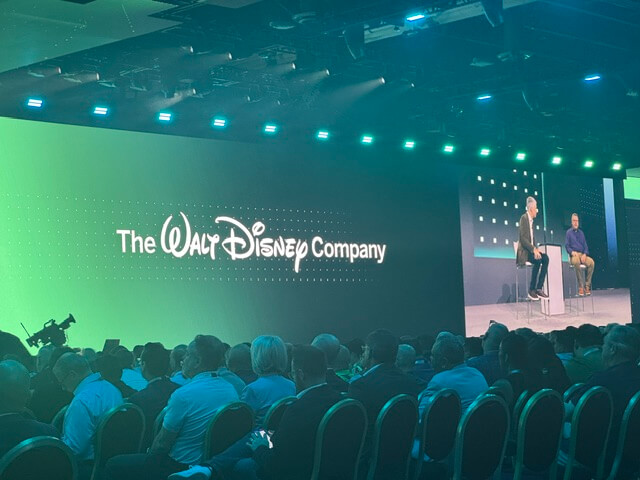
Additional customer discussions with AMD and Point32Health reinforced many of the themes highlighted throughout the event. Both organizations discussed the importance of AI governance, infrastructure efficiency, operational complexity, and the challenges associated with moving AI from experimentation into production.
These examples provided practical validation for HPE’s broader vision and demonstrated that many enterprises are already confronting the operational realities of AI adoption.
OurANGLE
HPE Discover 2026 showcased a company actively integrating not only its Juniper acquisition but also technologies from OpsRamp, Morpheus, and Zerto to provide its customers with an organized platform strategy.
It has been clear since bringing Juniper on board that networking is foundational to HPE’s vision for AI, security, cloud, and operations. The “Self-Driving Network” serves not only as a networking strategy but also as a blueprint for HPE to extend autonomous operations across increasingly complex IT environments (servers, storage, applications). Kudos to HPE.
At the same time, it seems like GreenLake Intelligence is emerging as the intelligence layer that will tie those environments together. By providing context, reasoning, orchestration, and operational intelligence across networking, infrastructure, security, data, and AI agents, GreenLake Intelligence has the potential to become HPE’s control plane for the Agentic Enterprise.
While there were a number of product innovations announced, the most interesting may have been the 1.6 Tb liquid-cooled Ethernet switch. This provides HPE with a first-mover performance advantage for organizations looking to take advantage of liquid-cooled networking for their AI environments. Hyperscalers and neo clouds will be particularly interested.
Across their respective keynotes, Antonio Neri, Rami Rahim, and Fidelma Russo each addressed different aspects of managing a modern agentic enterprise. Neri focused on building the foundation. Rahim demonstrated how networking can become autonomous. Russo outlined how intelligence can be coordinated, governed, and operationalized across increasingly distributed environments.
Together, they described a future where AI agents become active participants in enterprise workflows and where infrastructure, networking, security, observability, and operations work together as a coordinated system.
Ultimately, these innovations, networking foundation, and platform focus will drive increased competition and accelerate the development of valuable solutions for both hyperscalers and enterprise customers. It’s great to see the progress, especially on the network side, and I look forward to following future integrations and innovations.
For additional information on the announcements at HPE Discover, please visit their website.