
This research note examines the “AI Coding Chaos Trap”—an operational challenge where organizations become highly AI-active without becoming genuinely AI-productive.
It outlines why software engineering infrastructure must shift from tracking surface-level activity to mastering organizational coordination, institutional memory, and measurable business ROI. It highlights CodeVine and CEO Wells Burke’s strategic three-pillar model—Capture, Correlate, and Compound—as a critical architectural imperative.
Watch the Podcast
Executive Brief
The software industry is entering a major architectural and operational transition. AI coding assistants, autonomous agents, and agentic workflows are dramatically accelerating software development. However, they are also exposing a new challenge: organizations are becoming highly AI-active without necessarily becoming more AI-productive.
That challenge is to escape the AI coding chaos trap, in which fragmented workflows, duplicated code, disconnected AI use, and weak operational coordination threaten to undermine the long-term value of AI-assisted software engineering. In this context, we examine why CodeVine is an important emerging approach to the next phase of AI-native engineering: transforming developer productivity into coordinated organizational intelligence.
Key Takeaways:
- The next bottleneck in AI coding is organizational coordination: The challenge is no longer AI coding; it’s about operationalizing AI-assisted engineering across organizations before fragmentation erodes productivity gains.
- The market is optimizing for the wrong unit of analysis: most teams focus on code generation, whereas enterprise value depends on organizational coordination, institutional memory, and reusable engineering intelligence.
- Enterprises are measuring activity, not outcomes: Many organizations track tokens consumed, prompts generated, and active users, but struggle to measure engineering effectiveness, software quality, reduction in duplication, technical debt, time-to-market improvements, and measurable business ROI.
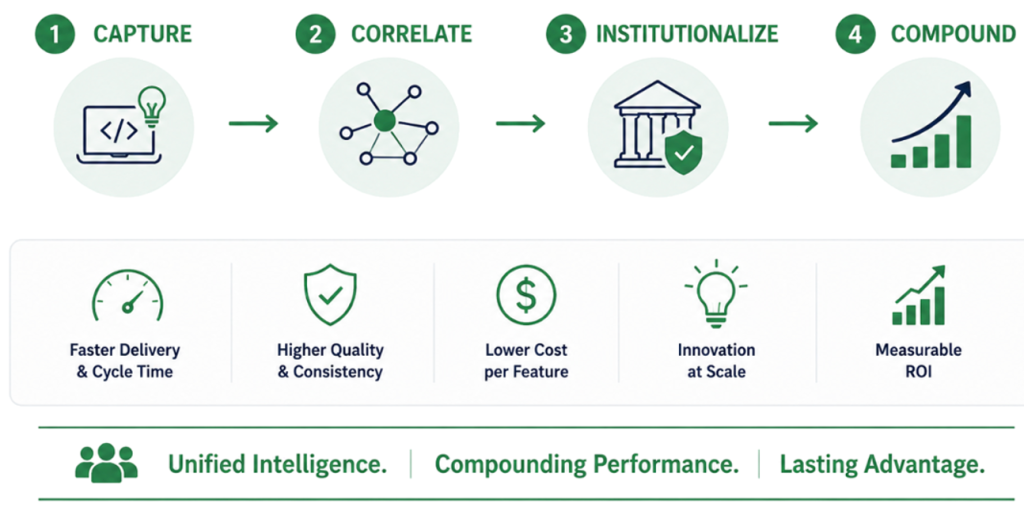
- Capture, Correlate, and Compound represent a new operational architecture: CodeVine’s three-pillar model is designed to transform the AI coding chaos trap into a continuously learning engineering system capable of preserving institutional knowledge, correlating intelligence across teams, and compounding organizational ROI.
- Engineering decision intelligence may become the next competitive moat: As AI coding capabilities commoditize, differentiation will shift to SDLC digital labor systems that embed decision intelligence into engineering systems.
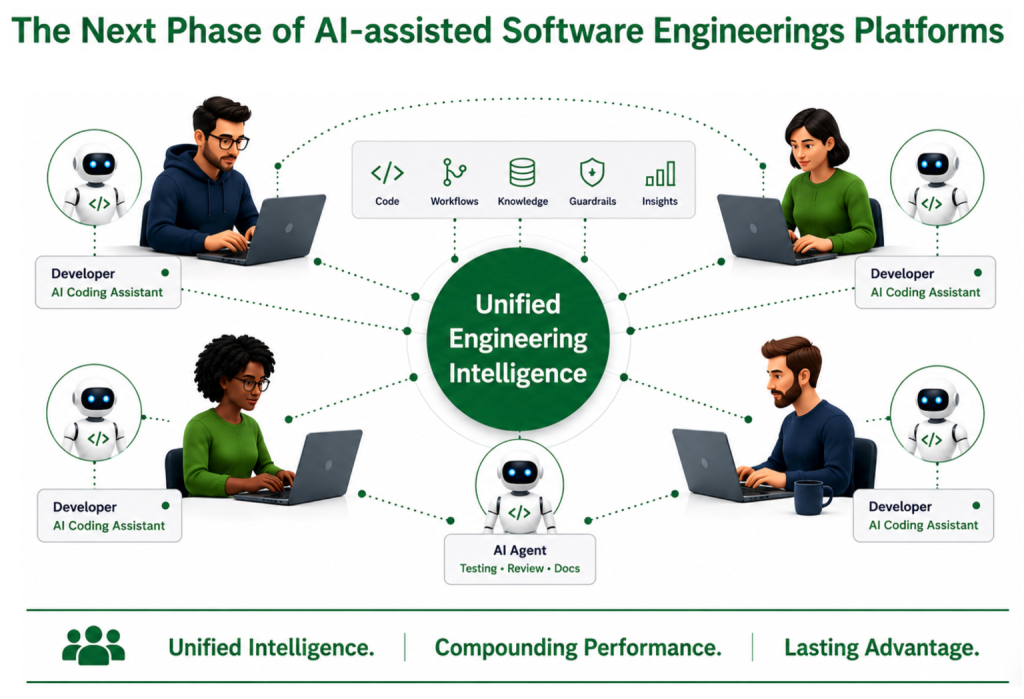
The broader implication is clear: the future of software development will not be determined solely by who has the fastest individual developers or the most advanced coding models. It will be shaped by who most effectively compounds engineering intelligence across humans, AI agents, workflows, and institutional systems.
The Costly Chaos of AI Coding
The problem is no longer whether AI can accelerate software creation, quality, and innovation. The problem is whether enterprises can operationalize that acceleration across teams before chaos overwhelms the gains. That is, escape the AI coding chaos trap.
The software industry is entering a consequential infrastructure transition. AI coding assistants, autonomous agents, and agentic development workflows are fundamentally changing how software gets built. GitHub research, for example, suggests AI-assisted developers can complete coding tasks up to 55% faster. Yet beneath those impressive gains lies a growing organizational challenge that many enterprises still cannot see clearly.
For example, code duplication is rising sharply, as much as 4x. Engineering workflows are fragmenting. AI usage is largely invisible to managers. Frontier developers are discovering breakthrough workflows that never scale beyond their own laptops. And organizations are struggling to connect soaring AI spend to measurable business outcomes and ROI.
The bottom line is that in many enterprises, software development is becoming AI-active, but not necessarily AI-productive.
This challenge was the topic of a recent episode of The Next Frontiers of AI, where CodeVine CEO Wells Burke outlined what may become one of the defining AI architecture problems of the decade: how organizations capture, correlate, and compound AI-generated engineering knowledge across teams.
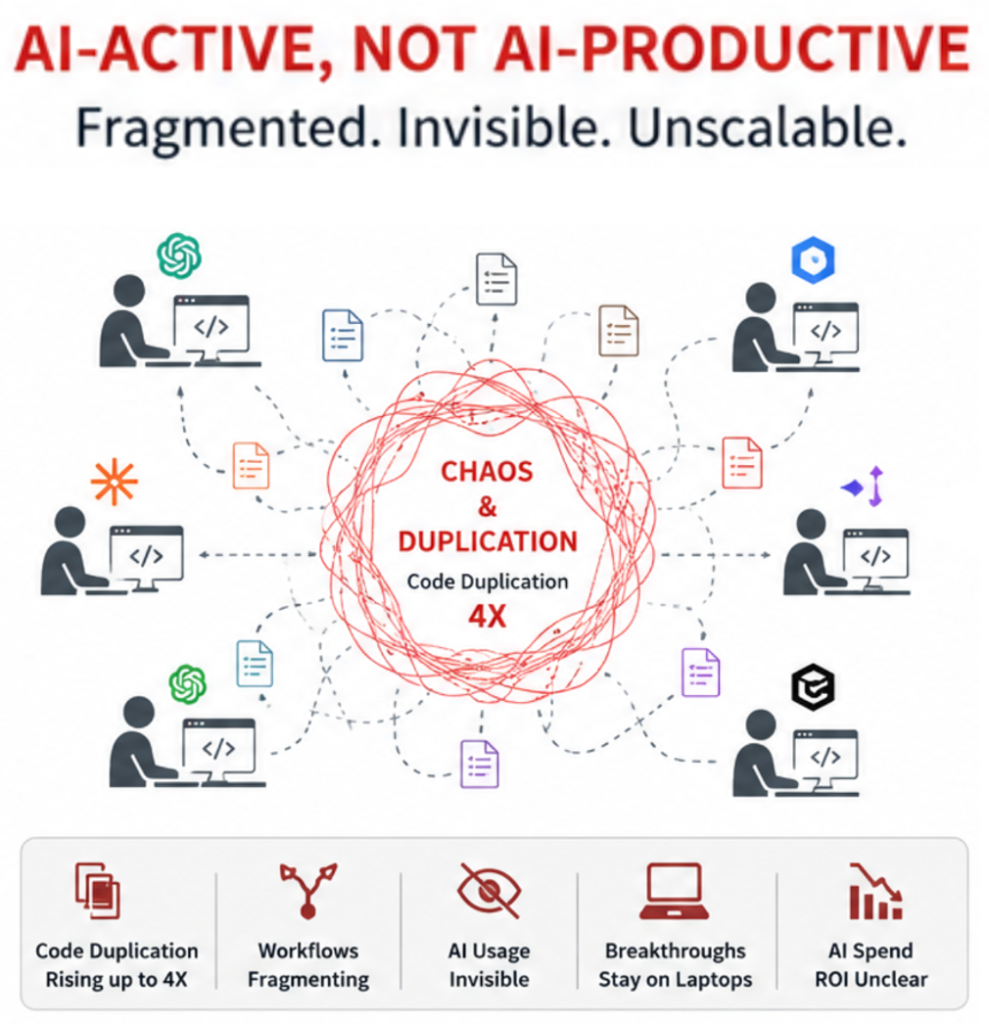
The core thesis is strategically profound: The winners in AI-native software development will not be determined solely by who has the fastest individual developers. They will be determined by who builds the strongest organizational intelligence, unification, and learning systems around AI-assisted engineering that

That distinction changes everything. Evolve into the costly chaos of individualism or the catalytic value of organizational unity. The difference lies not just in improved affordability but in speed, innovation, and ROI.
The Shift to Organizational Intelligence
Today, most enterprises are fixated on making individual developers faster. On the surface, that focus appears logical. Faster code generation creates highly visible productivity gains, impressive demonstrations, and immediate developer enthusiasm.
The rapid adoption of tools such as GitHub Copilot, Claude, Cursor, and GPT coding agents reflects this momentum.
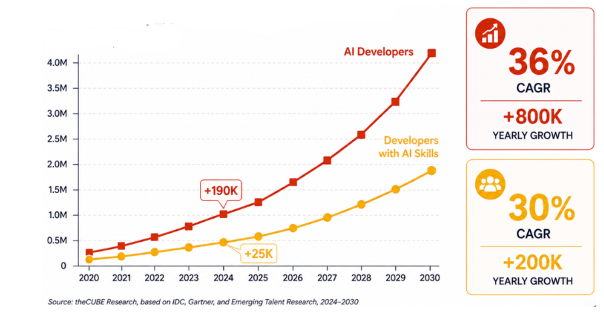
The aggregate of multiple industry studies suggests a 36% CAGR through 2030 in AI developers using AI coding tools. But the industry is at risk of optimizing the wrong level of productivity.
Software engineering, however, has never been an individual sport, and it’s definitely not in the era of enterprise AI. It’s an organizational system built on institutional knowledge, architectural discipline, and a shared operational context & innovation. AI coding tools dramatically amplify individual capability, but they can also amplify fragmentation if not operationalized as a team effort.
For example, an engineer may discover an AI workflow that compresses weeks of effort into hours, while another develops highly effective prompt architecture. Yet in many enterprises, those gains remain isolated within individual workflows, laptops, or teams. Instead of compounding organizational intelligence, AI often accelerates isolated activity, increasing duplication, fragmented coding patterns, governance blind spots, inconsistent architectures, and long-term technical debt. Over time, organizations risk becoming faster at producing software, but less coordinated in how that software is designed, governed, secured, and operationalized.
The next phase of AI-native software development will likely distinguish organizations that institutionalize AI-generated engineering intelligence from those that simply deploy coding assistants at scale. One approach compounds organizational capability. The other compounds’ fragmentation. And, critically, the path you take will compound rapidly over time – either productively or counterproductively.
Those that capture individual productivity, correlate patterns across teams, and operationalize reusable AI-assisted practices can progressively elevate the performance of the entire software delivery lifecycle. In contrast, those who leave AI use fragmented risk, creating an environment where productivity gains remain temporary.
The challenge is no longer simply generating more code faster, its escaping the AI coding chaos trap. The challenge is whether enterprises can transform AI-assisted software development into compounding organizational productivity and capability.
A Fixation on the Wrong Units of Measure
A related, critically important challenge is that many enterprises are measuring AI coding adoption but not its impact. They know which tools have been purchased, how many developers are active, and how many tokens are consumed. But they often cannot answer the more important question: Is AI making the engineering organization more productive, more coordinated, more secure, and more valuable to the business?
That distinction matters because AI coding is now moving faster than measurement systems can keep pace. While 8 in 10 developers are adopting multiple foundation models, coding assistants, AI-native IDEs, testing agents, and autonomous workflows, they are doing so faster than most engineering leaders can govern or measure. As a result, many leaders cannot confidently answer foundational questions: Which AI tools are improving engineering outcomes?? Which teams are compounding productivity versus simply generating more code? Which investments are improving business velocity and ROI? Which engineering patterns should become reusable organizational assets? Which engineering patterns should become reusable organizational assets?
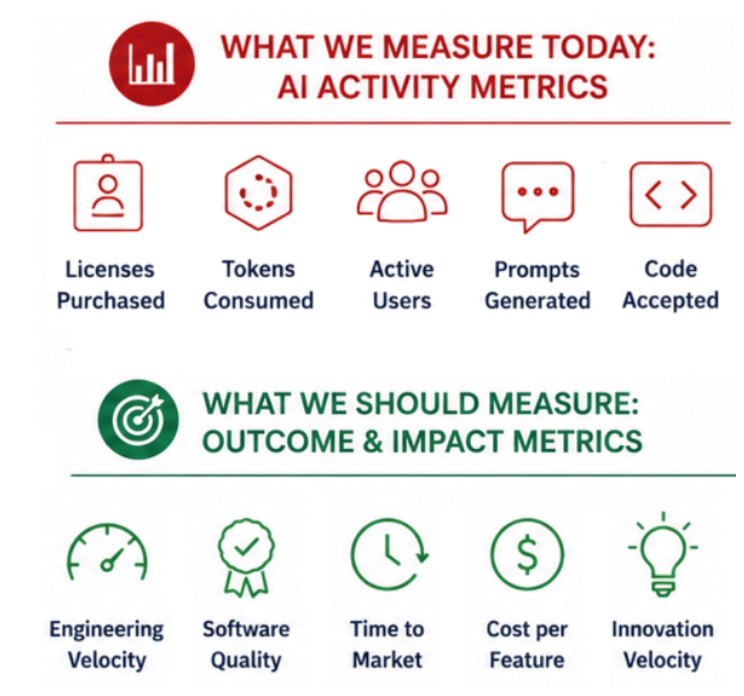
These are organizational intelligence questions, not individual productivity questions. The distinction matters enormously because the volume of AI-generated code alone does not guarantee business value. This is becoming one of the defining operational blind spots of AI-native engineering. Many organizations currently measure AI coding success through activity metrics: licenses purchased, tokens consumed, active users, prompts generated, code accepted, and tool adoption rates. These metrics are useful, but they are receipts, not returns. They indicate AI activity, not business impact.
The more strategic questions are different:
- Is code duplication decreasing?
- Is software quality improving?
- Is technical debt being reduced?
- Is time-to-market shrinking?
- Is cost-per-feature declining?
- How is ROI trending?
Emerging research suggests a shift in approach is needed.
GitClear research found rising duplicate code blocks, increased short-term code churn, and declining code reuse as AI coding tools become more prevalent.
Google research also found that a 25% increase in AI coding was associated with a 1.5% decrease in delivery throughput and a 7.2% decrease in delivery stability.
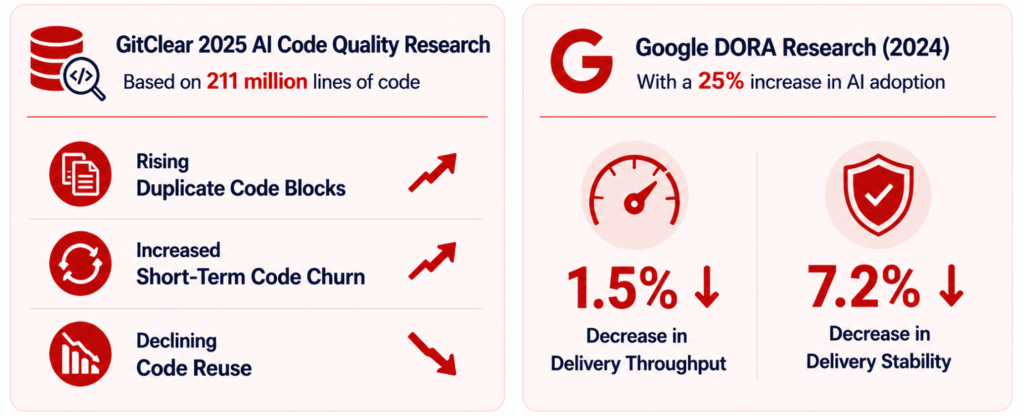
This does not mean AI coding tools are failing. It means enterprises are often measuring the wrong unit of value. The market now needs to shift from measuring AI activity to measurable engineering ROI.
The organizations that win will not simply have the highest rates of AI coding adoption. They will be the organizations that most effectively capture, unify, govern, and compound AI-assisted engineering knowledge into durable enterprise capability. That is where the competitive battlefield is shifting, and rapidly.
CodeVine: Escaping the AI Coding Chaos Trap
As covered, the challenge facing enterprises is no longer simply how to help individual developers code faster. The real challenge is how to transform isolated bursts of AI productivity into compounding organizational advantage.
This is where many organizations are beginning to stall. AI coding assistants may accelerate local productivity, but they often create fragmentation at scale: duplicated code, inconsistent architectural decisions, disconnected workflows, rising technical debt, and the erosion of institutional knowledge.
CodeVine is positioning itself directly at this inflection point. Rather than treating AI coding as an individual productivity tool, CodeVine approaches software development as a system-level coordination challenge.
Its platform is designed to operationalize what may become one of the defining imperatives of the agentic software era: the ability to capture, correlate, and compound value across developers, teams, and the broader enterprise. It is goal: help organizations escape the AI coding chaos trap.
In many ways, this reflects the broader transition now occurring across enterprise AI. Businesses are moving from isolated AI assistants toward orchestrated digital labor systems capable of creating organizational memory, workflow intelligence, and scalable operational leverage. As discussed previously, agentic AI delivers transformational ROI only when agents, humans, workflows, and institutional context operate as an integrated architected system rather than as disconnected islands of automation.
CodeVine’s architecture appears purpose-built for this next phase. It’s built around a deceptively simple but strategically important premise: enterprises cannot compound engineering velocity until they first capture institutional intelligence and correlate it across the organization.
CodeVine’s architecture appears purpose-built for this next phase. It’s built around a deceptively simple but strategically important premise: enterprises cannot compound engineering velocity until they first capture institutional intelligence and correlate it across the organization.
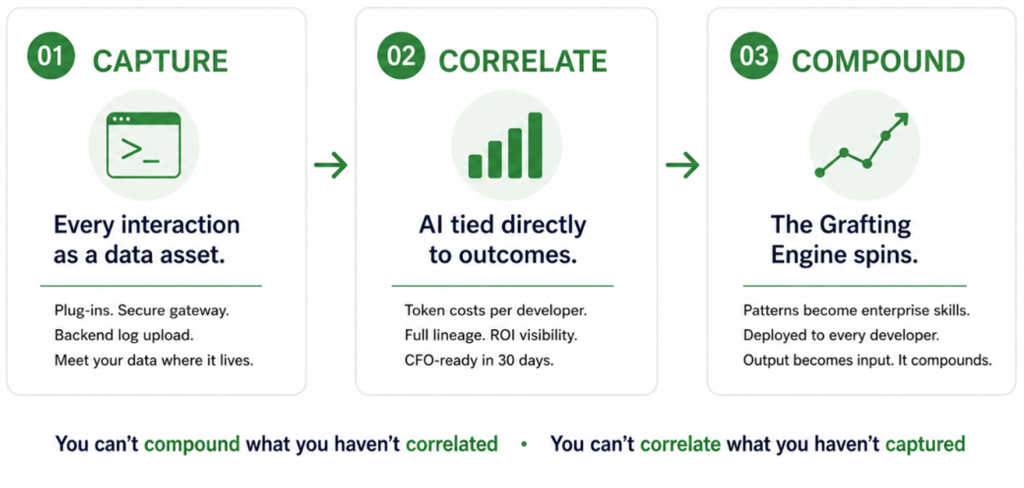
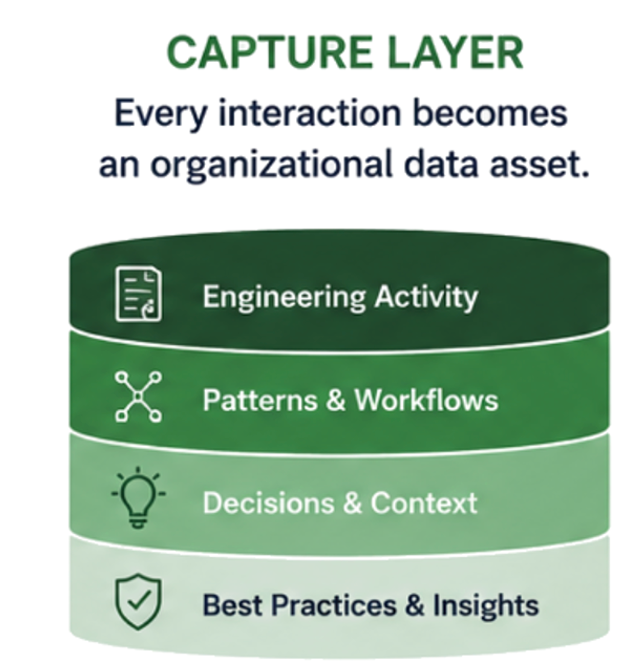
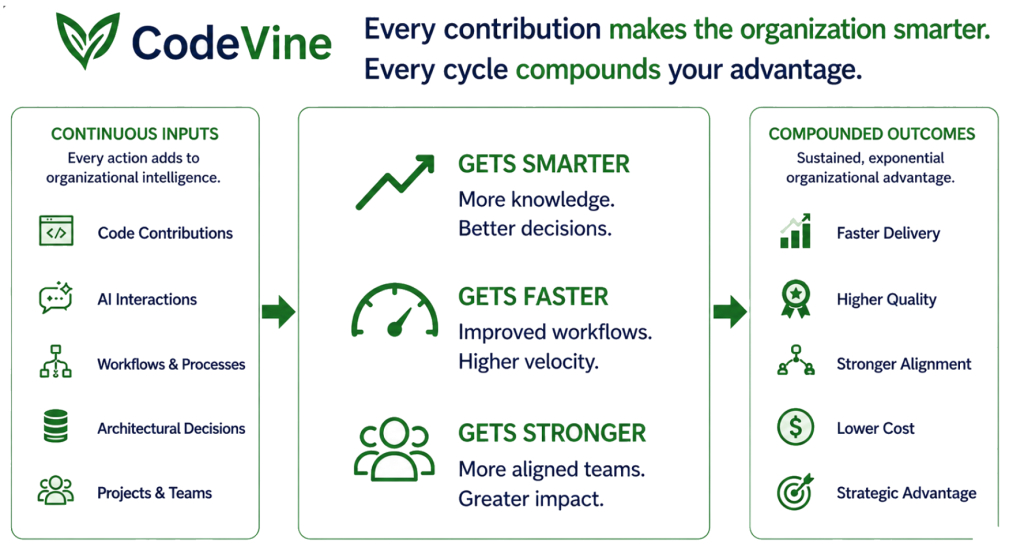
sssssThe platform’s three-pillar model — Capture, Correlate, and Compound — is designed to transform software development from a fragmented set of isolated coding activities into an intelligent, continuously learning operational system. First, CodeVine captures engineering interactions, workflows, decisions, and AI-generated outputs as reusable organizational knowledge. It then correlates that intelligence across developers, teams, repositories, workflows, and AI agents to create a unified operational fabric that reduces duplication and coordination failures. Finally, the platform compounds those insights over time, enabling every project, workflow, and AI interaction to strengthen the organization’s collective engineering intelligence.
Together, these pillars mark a broader shift now emerging across enterprise AI: moving from isolated productivity tools toward orchestrated digital labor systems capable of creating scalable organizational memory, workflow intelligence, and long-term strategic advantage.
CAPTURE: Preserving Institutional Intelligence
One of the most significant risks in the era of AI-generated code is the rapid erosion of organizational learning. As AI accelerates development velocity, institutional context can fragment across prompts, repositories, developers, and autonomous agents.
CodeVine addresses this by creating a shared operational layer that captures engineering activity, patterns, workflows, decisions, and reusable intelligence throughout the software lifecycle. Rather than letting valuable engineering knowledge disappear into isolated coding sessions, the platform continuously records and structures how work is done.
This is strategically important because software development has historically suffered from a lack of durable organizational memory. Tribal knowledge often resides with individual developers or in disconnected teams. When employees leave, reorganizations occur, or new projects emerge, much of that knowledge disappears.
In effect, CodeVine is attempting to transform software development from a collection of isolated coding events into a cumulative knowledge system. That distinction matters in the age of agentic AI. As enterprises increasingly employ digital workers alongside human developers, platforms that preserve workflow context, institutional reasoning, architectural patterns, and best practices will become foundational infrastructure for trusted digital labor.
This aligns closely with the broader industry movement toward semantic layers, contextual memory systems, and interoperable agentic workflows discussed throughout the digital labor transformation market.
CORRELATE: Connecting Work Across Organizations
Capturing information alone is insufficient. A bigger challenge is correlating what was captured across organizations. Modern enterprise software organizations are highly fragmented. Product managers, developers, architects, DevOps and security teams, QA organizations, and AI agents increasingly operate across disconnected tools and workflows. The result is duplication, inconsistency, and coordination failures.
CodeVine’s platform focuses heavily on connecting these fragmented activities into a more unified operational fabric. It correlates developer activity, AI-generated outputs, workflows, repositories, architectural decisions, and engineering patterns across teams and projects.
This capability becomes increasingly critical as enterprises scale AI-assisted development. Without coordination, organizations risk creating what could become the “AI velocity trap”: accelerating code production without improving organizational throughput, quality, or outcomes. Faster local optimization can actually increase enterprise-wide inefficiency if coordination mechanisms are absent.
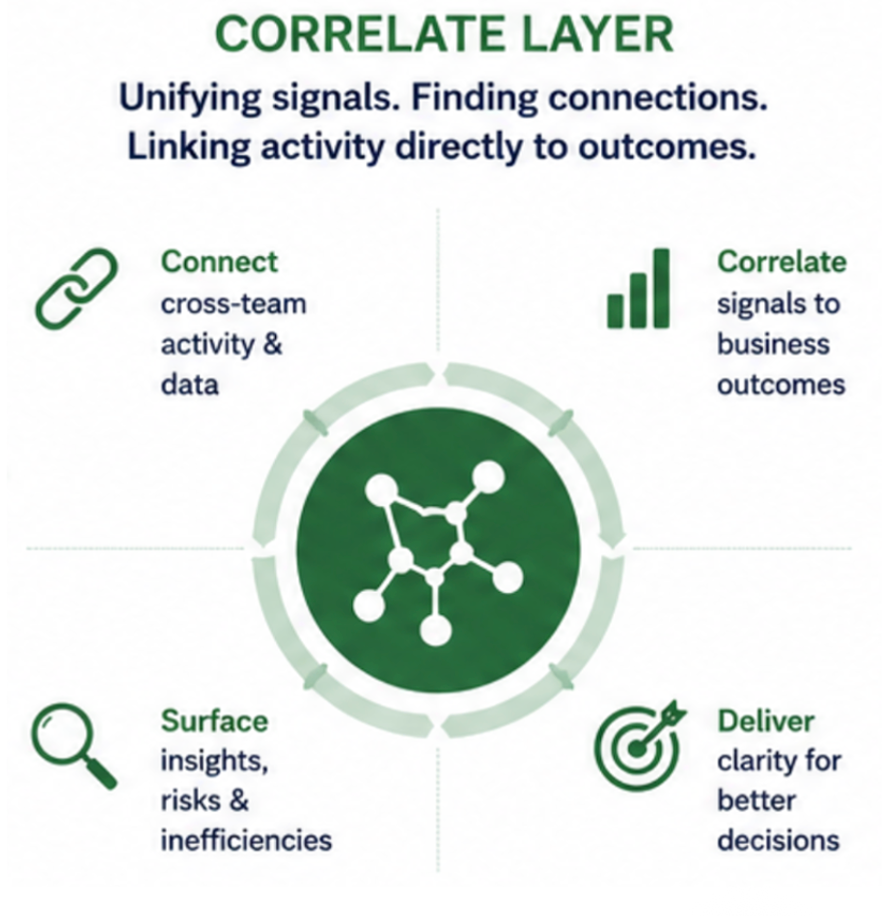
CodeVine’s premise is that the future advantage will not belong to organizations with the fastest individual coders. It will belong to those who can synchronize human developers and AI agents into coordinated engineering systems. This mirrors the broader evolution across enterprise agentic AI.
The most strategic AI platforms are no longer optimizing isolated tasks. They are orchestrating collaborative systems of humans, agents, workflows, and data that operate together toward shared business objectives.
COMPOUND: Turning Engineering Velocity into Strategic Advantage
Perhaps the most important dimension of CodeVine’s strategy is the compounding effect.
Traditional software development platforms typically generate linear productivity gains. One developer becomes incrementally faster. One workflow becomes partially automated. One team becomes somewhat more efficient. CodeVine is aiming for something more ambitious: compounding organizational intelligence and capability.
By continuously capturing engineering intelligence and correlating activity across the enterprise, the platform seeks to create a feedback loop where every project, workflow, code contribution, AI interaction, and architectural decision improves the system itself over time.
This creates the potential for enterprise engineering organizations to become progressively smarter, faster, and more coordinated as institutional knowledge accumulates.
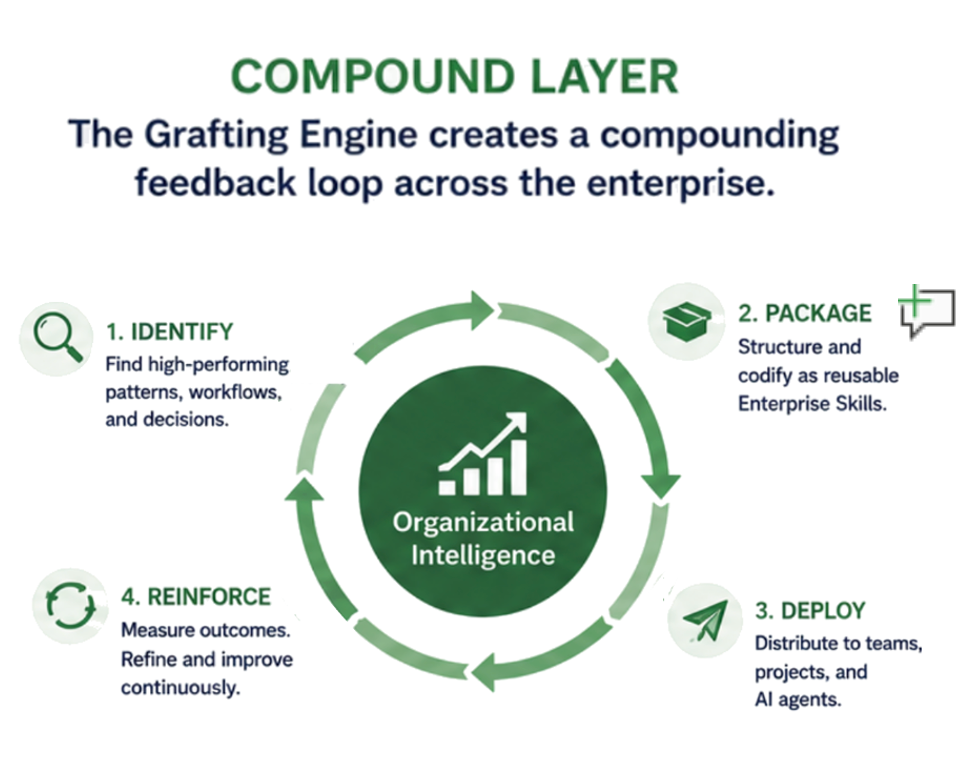
In effect, CodeVine is pursuing an operational memory layer for software development. That is a highly differentiated position in today’s crowded AI coding market.
Most AI coding vendors remain focused primarily on generation: helping developers write code faster. CodeVine appears more focused on orchestration, coordination, and organizational intelligence. That positions the company closer to the emerging enterprise need for AI-native software operations infrastructure rather than merely AI-enhanced coding assistance. This distinction may ultimately prove decisive.
AnalystANGLE – Our Take
The rise of AI-assisted software development is shifting the bottleneck in enterprise engineering from code generation to organizational coordination. As AI coding tools proliferate, enterprises risk accelerating fragmented activity rather than improving enterprise-wide execution – what we call the “AI Coding Chaos Trap.”
The challenge is no longer generating software faster. It is operationalizing engineering intelligence across humans, workflows, and AI agents in a coordinated, governable way. This is where CodeVine’s strategy stands out. Rather than positioning AI coding as a developer productivity tool, CodeVine treats software development as a systems-level coordination problem. Its architecture focuses on capturing institutional knowledge, correlating activity across teams, and compounding organizational learning, aligning with the broader evolution underway across enterprise AI and digital labor transformation. In that future, platforms that preserve context, reduce coordination friction, and improve organizational decision-making may become foundational infrastructure.
At the same time, the competitive landscape is moving at warp speed. Sustained differentiation will require moving beyond productivity claims toward measurable business outcomes, and escaping the AI coding chaos trap.
For enterprise leaders, several priorities are becoming increasingly clear:
- Build architectures capable of integrating humans, AI agents, and enterprise context
- Measure organizational effectiveness, not just developer activity.
- Treat AI-assisted development as a digital labor transformation initiative, not merely a tooling upgrade.
We also believe the next frontier will involve embedding more advanced decision intelligence directly into engineering systems. Today’s AI coding platforms remain largely correlative. Over time, enterprises will increasingly require systems that can explain WHY outcomes occur, evaluate tradeoffs, and support counterfactual “what-if” analysis across engineering operations. This broader shift toward knowledge graphs, context scopes, and causal reasoning may ultimately become a major differentiator for enterprise-grade development platforms.
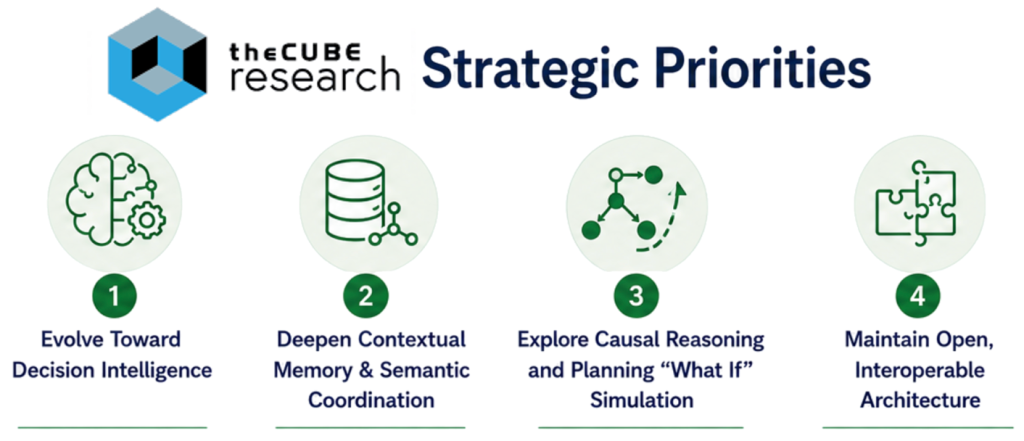
For CodeVine specifically, we see several strategic priorities that could strengthen its long-term positioning:
- Continue evolving toward engineering decision intelligence, not just workflow automation.
- Deepen contextual memory and semantic coordination capabilities.
- Explore causal reasoning and simulation technologies to improve engineering decision-making.
- Maintain an open, interoperable architecture capable of orchestrating any tool, agent, and workflow.
Ultimately, the next era of software development will likely reward organizations that avothat most effectively compound engineering intelligence across people, agents, workflows, and institutional systems.
That is the larger strategic shift CodeVine is attempting to lead.
Related Research & Resources:
- Explore CodeVine: https://codevine.ai/
- Read the CodeVine Manifesto: https://codevine.ai/ethos/

📩 Contact Me 📚 Read More AI Research 🔔 Subscribe to Next Frontiers of AI Digest